

Skip to content
Movemental Partner
Skip to content
Theme 1 of 5

The Tangible Kingdom: Incarnational Community

Christian faith was always meant to be tasted, touched, and experienced through ordinary neighborhood life, not managed from inside a building.

The Tangible Kingdom: Incarnational Community

Understand

Overview

When the Kingdom Shows Up on Your Street

For most of my adult life I watched the church work very hard to stay invisible. We built large, comfortable worship centers, paid staff to provide everything people needed spiritually, and at the end of the day had no money, no time, and no energy left to actually be present in the neighborhoods where we lived. The kingdom of God was supposed to be the best news the world had ever heard, and we were hiding it behind a Sunday morning production schedule.

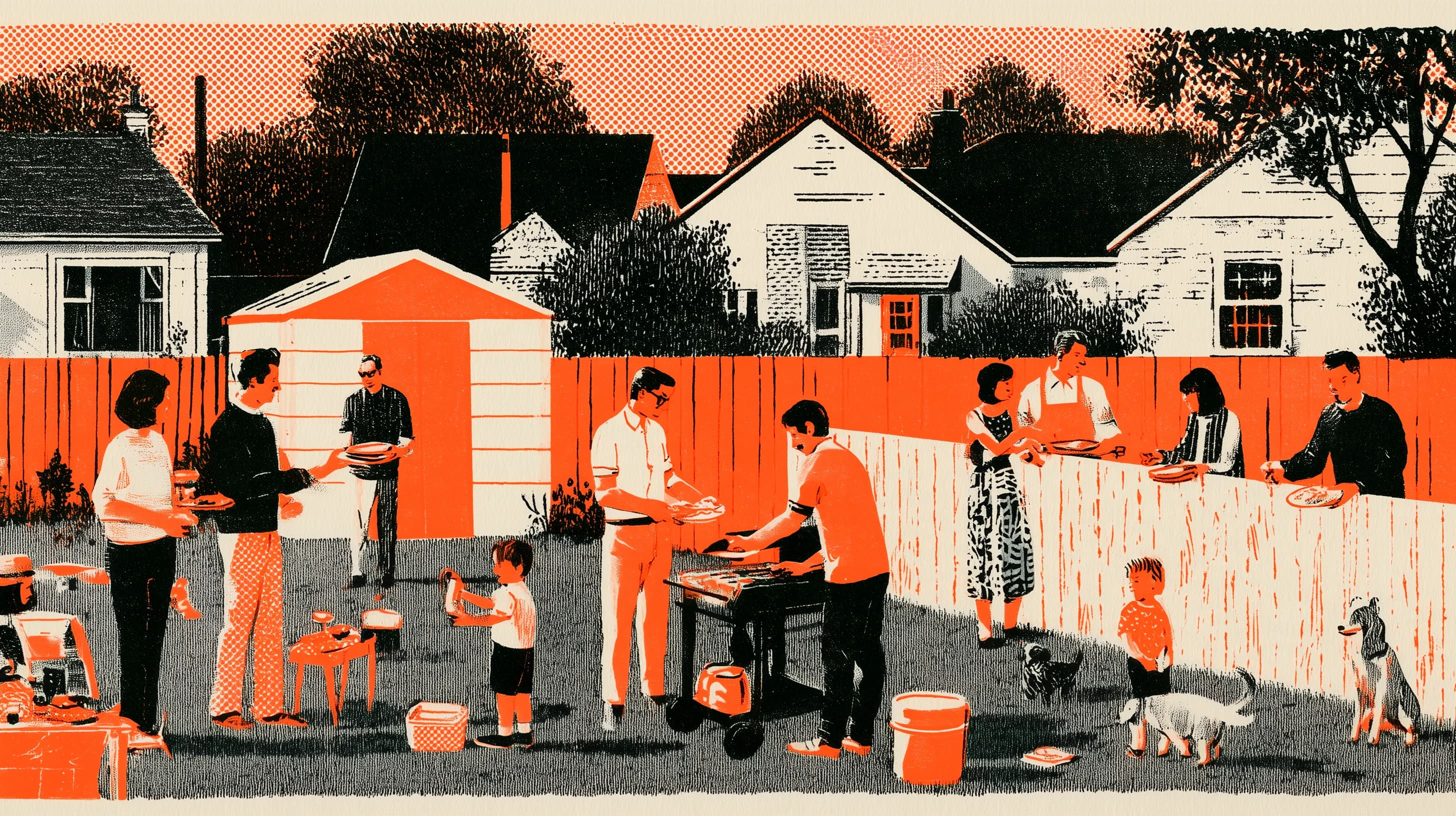
The Tangible Kingdom: Incarnational Community is the conviction I have staked my life on: that wherever a group of people finds a genuine rhythm among communion, community, and mission, the kingdom shows up in ways people can see, touch, and experience. It is not a program you launch or a model you import. It is a way of life you inhabit, block by block, table by table, conversation by conversation.

The problem with the church's present evangelical 'Come to us' paradigm is that it has not been an appropriate missiological response to the world people actually live in. The street you live on, the coffee shop or pub you frequent, the neighborhood you call home, these are the places where the kingdom either becomes tangible or stays theoretical. People will always be interested in good news if it is observable. The question is whether we are willing to let them observe it in us.

This theme maps the three spheres of incarnational life, communion, community, and mission, and names the barriers that keep most Christians stuck in one-dimensional faith. It is not abstract theology. It is a guide for how to stop running exhausting church programs and start planting your life so deeply into a real neighborhood that unchurched people naturally find themselves at your table, belonging before they ever believe.

Core Question

What would it look like for our community to be known for what we make tangible in the neighborhood rather than what happens inside our building?

The usual question

How do we get more people to come to our church?

The goal of our missional life is not to grow churches. The goal of church is to grow missionaries. The goal of the gospel is not to get people to church.
Hugh Halter, The Tangible Kingdom
The Model

The Incarnational Triad

At an international consultation that brought together monastic orders, house churches, submonastic communities working among the poor, and ordinary church planters, every group discovered they shared three primary aspects of incarnational life. These are not programs to add to a church calendar. They are spheres of a common life that, held together, make the kingdom tangible. Lose any one of them and you end up with either a holy huddle, a social club, or a burned-out activist.

  1. 01

    Communion

    represents oneness, those things that make up our communal connection and worship of God. It is not limited to a Sunday service or a personal quiet time. Jesus modeled a life commitment to be 'out there' while apprenticing and modeling the need to be internally connected to the source of all mission. In the Gospel of John he described himself as a branch connected to a vine, and said that apart from that intimate connection his followers could accomplish nothing. Communion is what keeps mission from becoming mere activism and community from collapsing into a social club.

  2. 02

    Community

    represents togetherness, those things we share as we form our lives together. The biblical call to community was never written to affinity-based small groups of people who look and think alike. It speaks to people divided by ethnic lines, deep traditions, and alternative worldviews, all finding Christ at the center of an inclusive life together. The rhythms that hold community together are sharing friends in third places, sharing food around real tables, and sharing spontaneous daily life. The worst mistake has been that Christians have tried to make their church programs their third place. Third places need to be in public zones.

  3. 03

    Co-mission

    Mission represents otherness, everything that is not directly about us, and that makes God's way tangible to real people and real issues in the world. It is the most fulfilling, the most fun, and the most inspiring and intriguing sphere to people who are watching from the outside. Mission is not a fringe program for a specialized group in the church. It is a natural part of everyone's discipleship. It is the easiest way to immediately make the concepts of God's loving kingdom tangible to anyone, and it gives people who have not yet come to faith a place to feel genuinely involved in something larger than themselves.

The 'Come to Us' Trap vs. Living Among

The 'Come to Us' ParadigmIncarnational Neighborhood Life
Where life happensThe 'Come to Us' ParadigmInside a building, during a 90-minute service Christians have heard beforeIncarnational Neighborhood LifeIn third places, front porches, poker tables, and kitchen tables where saints and Sojourners share spontaneous life
How people measure successThe 'Come to Us' ParadigmAttendance numbers, budget size, how many people prayed a prayer at the end of a serviceIncarnational Neighborhood LifeTransformation: the observable changes that take place over an extended period of time within a person, neighborhood, or nation
How relationships formThe 'Come to Us' ParadigmAffinity-based small groups where people meet with five couples just like themselves, keeping separate compartments of lifeIncarnational Neighborhood LifeInclusive community where unlike people find Christ at the center of their shared life together, with fences coming down
What communion looks likeThe 'Come to Us' ParadigmA separate, formal sacrament squeezed into a worship service before the congregation drives homeIncarnational Neighborhood LifeFood piled on food at a Big Table where children color with crayons, people tell their stories, and communion is integrated with everything else
How mission gets fundedThe 'Come to Us' ParadigmMoney sent overseas so the congregation can stay safely inside the suburban bubble and minimize riskIncarnational Neighborhood LifeTime, meals, and personal presence invested in the neighbors right across the street, beginning with a Fiona
What the church looks like to the worldThe 'Come to Us' ParadigmMusty, fussy, clubby, judgmental, mean, punishing, and ungenerous, not compelling people to come or stayIncarnational Neighborhood LifeOpen: a word one young man used to describe Adullam, adding that if more churches were like this, he might have checked God out sooner

The present evangelical 'Come to us' paradigm of church has not been an appropriate missiological response to the world around us. The ancient faith communities that set a course to change the history of the world did so without church programs, without paid staff, without Web sites, and without brochures, blogs, or buildings. They were lean.

Examine

Biblical Foundations

Unlike People at the Same Table

Ephesians 2:12

Historical Context

Elvis Has Left the Building

Early 1990s

A church plant in Portland, Oregon merges a predominantly white congregation with an African American congregation, grows and thrives externally, then collapses from internal power struggles over preaching rights, choir integration, and salary structures.

September 2001

Five weeks after September 11, during a church planting training in New York City, a nightly walk into an Irish pub in Queens rekindles the conviction that the kingdom of God must be tangible in ordinary neighborhood life.

Early 2000s, Denver, Colorado

Cheryl and I move the family to Denver and begin Adullam, spending nearly two full years building relational credibility before formally naming it a church, discovering that communion, community, and mission naturally emerge together when Christians stop hiding inside programs.

Mid-2000s, international consultation

An international gathering of monastic orders, house churches, submonastic orders working among the poor, and ordinary missional communities confirms that all authentic incarnational expressions share three primary spheres: communion, community, and mission.

2008, publication of The Tangible Kingdom

The Tangible Kingdom: Creating Incarnational Community is published by Jossey-Bass, naming the three-sphere framework and the Adullam story as a field-tested alternative to the attractional 'Come to us' paradigm that had dominated American evangelical church life for decades.

Field Studies

Where the Kingdom Got Tangible

The Incarnational Triad is not a theory developed in a classroom. Every piece of it was worked out in real neighborhoods, around actual tables, with people who had no interest in attending church.

Denver, Colorado, Adullam community

Steve and the Deck

I first met Steve when I was unloading my U-Haul to move into our home and he came over and volunteered to help. During the first year, I prayed a lot about Steve and his wife Jen. I knew they had some church background, but it was obvious they had put in their time and were enjoying a break. Steve would invite me to play poker with his friends, and we would invite them and their friends to our community gatherings, parties, and spontaneous dinners. One day Steve asked me to help him build a deck on the back of his house. What Steve didn't tell me was that this deck was going to be big enough to land a Huey helicopter on. One day, while Steve was at work, I went over to his backyard and began driving screws into the deck by myself. As I was bent over, being faithful, I felt a warm sensation on the back of my leg. It wasn't the warmth of the Holy Spirit descending on me. It was Ruger, their ninety-pound black Lab, marking his territory. A month before the deck project I had been in Scotland being a really successful minister. Now I was getting peed on, pondering why I had spent three weeks helping a friend build a deck. The only answer was that God had put this before me to do. Not long after, I got to baptize Steve's sister, who had also found faith and home with Adullam. If I had judged my successfulness at month twelve or month twenty-four, I would have quit.

Denver, Colorado, Adullam community, Saint Patrick's Day 2005

Big Table and the Hockey Dad

A Saint Patrick's Day party for about seventy-five people draws in an unchurched hockey dad who smuggles his own beer in a fanny pack because he assumes a church party will not have any. He is wrong, and his assumptions about Christians begin to shift around a bar full of home brew.
Denver, Colorado, Adullam community

Three Couples and the Discovery Zone

Three unmarried couples living with their partners begin attending Adullam and become deeply involved in community life. Rather than confronting their living arrangements with a Bible verse, a coffee conversation about spiritual leadership leads all three couples to voluntarily choose to live separately, each saying it simply felt right.

Apply

Formation

Rhythms Worth Living

Step 1

Step 1

Identify a third place near your home, a coffee shop, poker table, or park, and show up there regularly with both saints and Sojourners.

Step 2

Step 2

Share food with someone outside your faith circle this week; let the meal be the whole point, not the warm-up to a gospel presentation.

Step 3

Step 3

Treat interruptions as the agenda: the spontaneous, unplanned moments are where relationships form and God tends to show up.

Step 4

Step 4

Stop describing your relationship with God as personal and start living it as communal, bring someone else into the rhythm.

Step 5

Step 5

Bless one neighbor this month with no strings attached: pay a debt, shovel a driveway, watch a kid, open your home.

Step 6

Step 6

Audit your church calendar and ask which activities keep you inside the building and which ones scatter you into the neighborhood.

Reflection

Where the Kingdom Shows Up

Question 1 of 5

Of the three spheres, Communion, Community, and Co-mission, which one feels natural to you and which one do you quietly avoid? What does that avoidance cost the people around you?

Go deeper

Watch for the Distortion

Ways This Gets Hijacked

The Incarnational Triad has been around long enough to get misread in a few predictable directions. Each distortion takes something real and squeezes the life out of it by pulling one sphere away from the other two.

Communion without the street

Some communities build a rich interior life of worship and prayer and never leave the building. Communion becomes the whole thing. But the spheres of community and mission exist because oneness with Christ always moves outward. A group that is only gathering for God is not yet tangible to the watching world, no matter how genuine the worship.

Community as affinity club

The call of community is not about finding people just like us. The early church was Parthians, Medes, Elamites, and Arabs at the same table. When we build small groups around shared demographics and mutual comfort, we have replaced inclusive community with a Christian version of the Harley wave, warm to our own kind, barely an acknowledgment to everyone else.

Mission as program, not posture

Co-mission gets distorted the moment it becomes a scheduled outreach event rather than a daily posture of blessing without strings. Jesus fed thousands without giving an invitation at the end. Blessing done with a covert agenda is still coercion, and people are not stupid, they know when there is a catch taped to the side of the water bottle.

Tangible Kingdom as house-church ideology

The Incarnational Triad is not an argument for small over large, simple over structured, or house church over Sunday gathering. Any form of church, mega, cell, house, or hybrid, can be attractional or incarnational. The question is whether the structure frees up the gospel or keeps people positioned as observers inside a building.

Q&A

Neighborhood Doubts, Straight Talk

I'm already exhausted by church. How do I add incarnational community on top of everything else?

You probably don't add it, you swap it. The women's leader who did aerobics at the church building moved her workout to a public gym and brought her Bible study to the coffee shop connected to the front desk. She didn't get a longer week; she got a different one. Start by asking which existing habits could happen in a third place rather than inside a church program.

What is a third place and why does it matter for The Tangible Kingdom: Incarnational Community?

A third place is anywhere that is not home and not work, a pub, a poker table, a coffee shop, a park. It is a place of familiarity where people can relax and find friends. The worst mistake Christians make is trying to turn their church programs into their third place. Third places need to be in public zones where Sojourners already are.

What exactly are the three spheres and why do all three have to be present?

Communion is oneness, intimate connection with God through worship and spiritual formation. Community is togetherness, sharing friends, food, and spontaneous life. Mission is otherness, everything focused on people outside the community. The argument is simple: whenever a group finds a rhythm among all three, you will always find the Kingdom. Pull one out and the others drift toward either a holy huddle or a social club.

How is the Co-mission sphere different from running outreach programs?

Outreach programs are events you attend. Co-mission is a posture you carry into Tuesday. Biblical blessing, Shalom, is holistic, action-oriented, and given with no strings attached. Jesus healed people and fed thousands without tacking an invitation onto the end. The habits of leaving, listening, living among, and loving without strings are not steps to evangelism; they are habits of a Christ follower who wants to live faithfully like Jesus lived.

Our church is consumer-oriented. People want to be served, not sent. How do we change that?

Consumerism is the barrier between Communion and Co-mission. It is based on the belief that personal wants trump the needs of others. The corrective is not a better sermon about sacrifice, deeply ingrained habits only change as they are replaced with new habits. Limit how much comfort and convenience you provide inside the church so people have time, money, and energy left for mission.

How do we measure whether The Tangible Kingdom: Incarnational Community is actually working?

The gospel report card tracks transformation, not attendance. It speaks to observable changes over an extended period within a person, a neighborhood, or a community. Success is faithfulness, the little conversations, the subtle relational growth, the small steps toward God that you would miss entirely if you only checked the numbers at month twelve.

About the authorHugh Halter

Hugh Halter is a missional church leader, author, speaker, and consultant based in Alton, Illinois, whose work over more than three decades has helped shape the North American conversation about incarnational community and the gathered-and-scattered church.

Next Steps

The Tangible Kingdom: Incarnational Community

Pick one neighbor you have never shared a meal with and invite them over this week. No agenda, no gospel tract, no follow-up plan. Just food and time. That is where The Tangible Kingdom: Incarnational Community begins, not in a strategy document but around a table in your actual neighborhood, with the actual people who live on your actual street.

Related themes

All themes